

Rasche Veränderungen in der Wettbewerbslandschaft, bei den Verbrauchererwartungen, den Lieferketten und den Vorschriften haben dazu geführt, dass der Lebensmitteleinzelhandel mehr denn je auf Daten angewiesen ist, um sich anzupassen und erfolgreich zu sein.
Zu den wichtigsten Daten für Lebensmittelhändler gehören Produktdaten - Informationen, Inhalte und Werte zu den Produkten, die sie verkaufen. Von den Nährwertangaben einer Ananas bis hin zu den Abmessungen einer Müslischachtel, den gesundheitsbezogenen Angaben eines Joghurtbechers oder dem Lieferkettenpfad einer Tiefkühlpizza - die Produktinformationen sind komplex, vielfältig und ändern sich ständig.
Um mit diesem Datenbedarf Schritt halten zu können, setzen Einzelhändler zunehmend auf Produktinformationsmanagement (PIM)-Technologie.
“Grocery has been the category that saw the biggest shift in shopping habits, with large numbers of consumers who had never purchased groceries online before now making it a regular habit”.
Forbes: The Pandemic Changed How We Shop For Groceries, Adobe Report Shows
Warum der Lebensmitteleinzelhandel Produktinformationsmanagement braucht
The benefits of PIM are well documented for organizations of all kinds, from manufacturers and brands to marketplaces and retailers.
Aber die besonderen Herausforderungen, denen Lebensmittelgeschäfte und Supermärkte gegenüberstehen, machen PIM für diese Branche besonders nützlich. In den letzten Jahren haben sich mehrere wichtige Trends herauskristallisiert, die genaue, umfassende Produktinformationen für Lebensmittelhändler wichtig machen und den Bedarf an PIM in den Fokus rücken:
- More digital customers: While online shopping for grocery customers was not unknown before the pandemic, there was an explosion in this channel in recent years. Online grocery stores which were flat online jumped 103% year-over-year to $73.7 billion in 2020. Many retailers in this space were behind in eCommerce adoption, and stores had to get a crash course on selling groceries digitally. They had to focus on improving the customers’ digital shopping experience, which heavily relies on the quality of the product information.
- Supply chain issues: In addition to delays and increase in prices, the disruptions to the global supply chain also caused numerous out-of-stock issues for grocers. To prevent customers from abandoning their carts or losing them entirely, grocery stores had to get smarter about leveraging their in-stock items by suggesting substitutions when possible. A well-managed product information database is the key to maintaining customer satisfaction in the face of unexpected shortages.
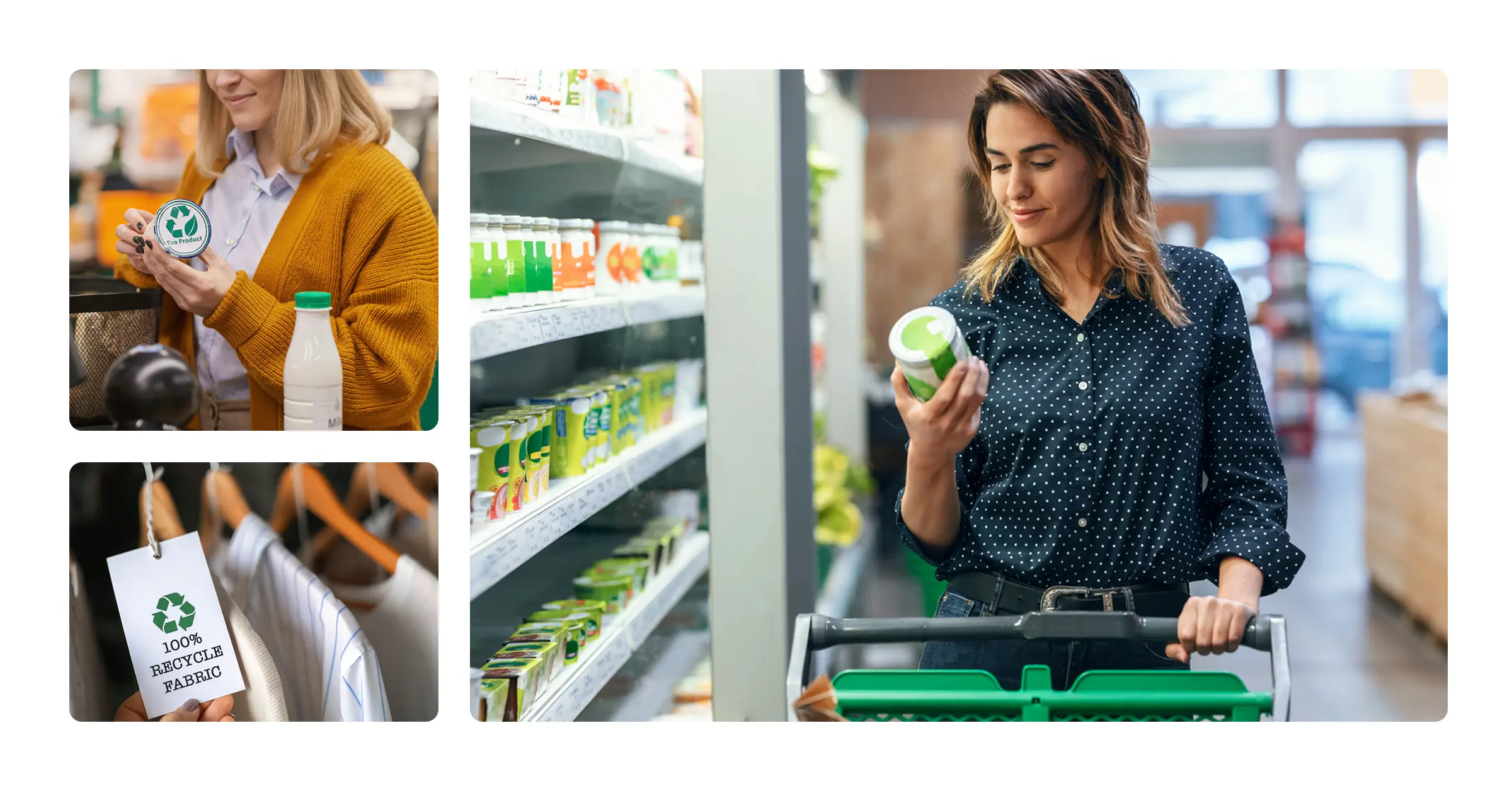
- More discerning shoppers: Consumers are giving the products they buy more scrutiny than ever—especially the ones they’re eating. They’re expecting greater transparency for where their food comes from and what’s in it. Demand for products that fit certain health and lifestyle standards (vegan, free trade, gluten free, etc.) is spiking; for instance, half of US shoppers now report wellness as a priority (up from 42% in 2020). Combined with mounting regulatory standards on food labelling and traceability, there’s a lot of pressure on grocery brands to manage and provide accurate, up-to-date information for all their products.
- Inflation: Starting in 2022 there was an acceleration in the inflation rate, putting pressure on grocery chains from two sides. They saw an increase in their costs but also saw a drop in consumer spending due to high prices. Staying profitable in times like this means staying lean, finding opportunities to improve efficiency, and identifying problem points that eroded margins. In all these missions, having full vision and mastery of your catalog is essential.
Abwägung der PIM-Implementierungsoptionen
Herkömmlicherweise wurden viele PIM-Lösungen "vor Ort" entwickelt oder bereitgestellt, d. h. auf den firmeneigenen Servern des Unternehmens, das sie einsetzt. Damals war dies sinnvoll, da diese Lösung oft einfacher zu sichern war, dem Unternehmen mehr Kontrolle über die Konfiguration gewährte und den direkten Zugriff auf das interne PIM schnell und einfach ermöglichte. Aber PIMs vor Ort bringen Herausforderungen mit sich, die im Laufe der Zeit immer größer werden: Sie erfordern viele IT-Ressourcen, haben eine veraltete Benutzeroberfläche und Funktionalität und lassen sich nicht gut mit anderen modernen Systemen integrieren.
Im Laufe der Zeit sind cloudbasierte PIMs immer beliebter geworden, vor allem, da die Herausforderungen in Bezug auf Sicherheit und Konnektivität funktionell gelöst wurden. Dabei handelt es sich um PIM-Lösungen, die auf den Servern eines PIM-Anbieters im Namen der Nutzerpartei laufen. Cloud-basierte PIMs können vom Anbieter ständig aktualisiert und verwaltet werden, wodurch sich die Arbeitsbelastung der Nutzer verringert und die Technologie durch Verbesserungen der Benutzeroberfläche und der Funktionalität auf dem neuesten Stand gehalten wird.

Die Unternehmen haben den Wert der Cloud-Technologien weitgehend erkannt.
Traditionelle PIM-Anbieter haben das volle Potenzial der Cloud-Technologien nur langsam ausgeschöpft. Die langsame Akzeptanz hat dazu geführt, dass ihre Kunden mit den Wachstumsschmerzen des Anbieters zu kämpfen hatten. Selbst diejenigen, die eine Cloud-basierte Lösung anbieten, haben sich weiterhin abgesichert, indem sie weiterhin On-Premise-Alternativen anbieten. Dies führt zu widersprüchlichen Prioritäten und einer Ablenkung der Ressourcen von dem, was dem Endbenutzer am meisten nützt.
Die Vorteile von Cloud-basiertem PIM für Lebensmitteleinzelhändler
The right PIM solution could fundamentally transform your business’s ability to adapt and grow in the real-time economy. With the stakes so high, it’s important to consider all the most important factor:
- Expandability: The scale and scope of data needs for a grocery company can change rapidly. Cloud-based solutions allow businesses to seamlessly and rapidly adjust their storage capacity to accommodate varying data volumes, whether it’s a sudden spike in demand or a gradual increase over time. With the cloud’s elastic and on-demand resources, organizations can efficiently scale their data storage up or down, ensuring cost-effectiveness and optimal performance while adapting to evolving data needs.
- Service and maintenance: Grocery retailers are good at delivering a great selection of quality products to their customers, but their strengths don’t always lie in more technical functions. PIM vendors with cloud-based solutions allow users to focus on their core competencies: Cloud providers handle the underlying infrastructure maintenance, security, and updates, freeing businesses from the burden of managing complex IT tasks and allowing them to concentrate on their core business activities, leading to increased productivity and innovation.
- Financial flexibility: Cloud computing allows businesses to shift from large upfront capital expenditures on hardware and infrastructure to manageable operational expenses based on actual usage, promoting financial flexibility and scalability for organizations of all sizes. Also, the pay-as-you-go model of cloud computing enables businesses to optimize costs by provisioning resources only when needed, avoiding unnecessary expenditures, and ensuring better budget management.
- Greater computational resources: Cloud providers offer access to vast computational resources, enabling businesses to implement complex tasks like search algorithms, data analysis, and machine learning at a fraction of the cost and time compared to setting up on-premises infrastructure.
- More modern technologies: Cloud platforms continually update and expand their services, allowing businesses to leverage the latest technologies, tools, integrations and innovations to stay competitive and deliver cutting-edge solutions to their customers. This helps grocery brands stay ahead in the rapidly evolving digital landscape.

Die bevorzugte PIM-Lösung für Lebensmittelläden
In der sich ständig verändernden Landschaft des Lebensmitteleinzelhandels ist die Einführung einer cloudbasierten PIM-Technologie entscheidend für das Wachstum. Die Vorteile der Agilität, Skalierbarkeit, Flexibilität und Zusammenarbeit, die eine Cloud-native PIM-Lösung bietet, machen sie zur idealen Wahl für Lebensmitteleinzelhändler, die in einem schnelllebigen Einzelhandelsumfeld erfolgreich sein wollen.
Syndigo ist seit langem ein zuverlässiger Partner für die Lebensmittelindustrie und verfügt über enge Verbindungen und Partnerschaften im globalen Ökosystem des Lebensmitteleinzelhandels. Insbesondere Lebensmitteleinzelhändler verlassen sich auf das umfangreiche Lieferantennetzwerk von Syndigo, um die besten verfügbaren Produktinformationen zu erhalten, und auf unsere Cloud-native PIM-Lösung, die ihnen hilft, diese umfangreichen Daten zu speichern, zu verwalten und nutzbar zu machen.
For instance, Denner is the third largest food retailer in Switzerland and part of the Migros Genossenschafts Bund. It is currently running a massive digitization program which has at its core, the goal of mastering their product data, and the establishment of a 360° view of the product data for effective and flexible digitization of all processes from item listing to customer experience. Read here about how Denner leveraged the power of Syndigo’s solution to make their vision come true.
Schliessen Sie sich Hunderten von anderen Marken und Einzelhändlern an, die das volle Potenzial Ihrer Daten ausschöpfen wollen. Klicken Sie hier, um eine individuelle Demo anzufordern und die Leistungsfähigkeit eines Cloud-basierten PIMs selbst zu entdecken.